
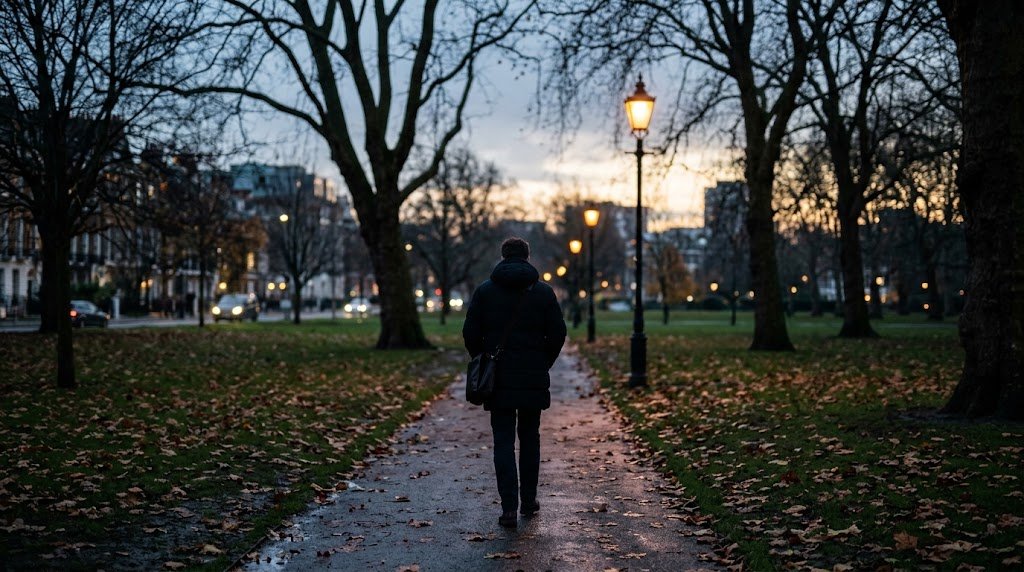
Why do I feel depressed in November? If you have felt flat, tired, or tearful since the clocks went back, you are far from alone. The change can feel sudden: one week you leave work in daylight, the next you are walking home in the dark.
On 25th October 2026 the UK moved from British Summer Time back to Greenwich Mean Time. In London, sunset on 4th November is at 4:28pm, according to sunrise and sunset times for London, and by the end of the month it falls before 4pm. Many people now go to work and come home in near darkness.
That shift has real effects on the body and mind, but it is not the whole story. Here is what psychology says about why November can feel so heavy, and what tends to help.

How less light affects mood
Light is the main signal that sets the body clock. When there is less of it, the brain’s timing systems can drift. The US National Institute of Mental Health explains in its guide to seasonal affective disorder that people with winter depression tend to have lower activity of serotonin, a brain chemical involved in mood, and may produce too much melatonin, the hormone that makes us sleepy.
The NHS describes the same idea in its overview of seasonal affective disorder: less daylight in winter may change levels of melatonin and serotonin, which affect mood and sleep. Shorter days can also mean less time outdoors, less exercise, and fewer chances to see people, all of which matter for well-being.
Winter blues or seasonal affective disorder
Many people notice that they sleep more, crave comfort food, and feel less like going out in late autumn. NIMH notes that many people feel down or have the winter blues as the days get shorter, and feel better when longer daylight returns in spring.
Seasonal affective disorder, or SAD, is more than that. The NHS describes it as a type of depression that usually happens in winter, with symptoms such as persistent low mood, losing interest in everyday activities, feeling hopeless or worthless, sleeping more, and eating more. In the DSM-5, the manual psychiatrists use for diagnosis, SAD is not a separate condition but is classed as major depressive disorder with seasonal pattern. Psychreg has a fuller guide to the symptoms and causes of seasonal affective disorder.
The key difference is impact. Winter blues may make November feel duller. SAD makes it hard to work, look after yourself, or enjoy the people around you, and it tends to come back at the same time each year.
Is November the most depressing month
Every year, someone names a particular day or month as the most depressing of the year. The best-known example is Blue Monday in January, which began as a marketing campaign and has been widely dismissed by psychologists, as Psychreg explained when it looked at why Blue Monday is a myth.
November deserves the same caution. There is no good evidence that it is the most depressing month for everyone. Mood is shaped by health, relationships, money, work, and personal history as well as by daylight, and plenty of people feel fine in November and struggle in spring or summer instead. What is true is that the early weeks after the clock change are a noticeable shift, and some people feel it more than others.
Other reasons November can feel heavy
Light is only part of it. November tends to bring a cluster of other pressures.
- Anniversaries and grief: Remembrance events, the anniversary of a death, or the first Christmas without someone can bring loss back to the surface.
- Year-end comparison: As the year closes, it is easy to measure yourself against plans you made in January or against other people’s highlights online.
- Money and Christmas pressure: Rising heating bills, gift lists, and social plans can add worry at a time when energy is already low.
- Fewer easy pleasures: Cold, wet evenings make it harder to do the things that usually lift mood, such as walking, sport, or seeing friends.
Psychreg has also gathered things to do in November that are good for your mental health, which may help if the month feels empty.
What can help
These steps are simple, but they work best when you keep them going through the whole season, not just on a good day.
- Get daylight early: The NHS advises getting as much natural daylight as you can and going outside every day. A walk in the morning or at lunchtime counts, even when the sky is grey.
- Keep a steady routine: Going to bed and getting up at the same time each day helps keep the body clock stable when the light is not doing that job.
- Keep moving: Regular exercise is one of the NHS’s recommended self-help steps for low mood in winter.
- Stay in touch: Plan contact with friends and family rather than waiting until you feel like it, because low mood often makes people withdraw.
- Think carefully about light boxes: Some people find a light box, sometimes called a SAD lamp, helpful. The NHS says light therapy is not usually available on the NHS because there is not enough evidence to show whether it works, and advises speaking to a GP first, as it may not suit people with certain eye conditions or those taking some medicines.
When to see a GP
It is worth seeing a GP if low mood lasts for more than a couple of weeks, keeps coming back each winter, or makes it hard to cope with work, studies, or home life. A GP can talk through what is going on and discuss options such as talking therapy or antidepressants, which the NHS lists as treatments for SAD. You do not need to wait until things feel unbearable.
Where to get support in the UK
If you are struggling or having thoughts of harming yourself, you can call Samaritans free on 116 123, day or night. Mind, the mental health charity, has information on low mood and seasonal depression. If you are in immediate danger, call 999 or go to A&E.
FAQs
- Is November the most depressing month? No single month is the most depressing for everyone. Claims like Blue Monday have no scientific basis. In the UK, though, early November follows the clock change and brings sunset before 4:30pm, and less daylight can lower mood, energy, and sleep quality for many people, especially those prone to seasonal depression.
- Is seasonal depression real? Yes. Seasonal affective disorder is recognised by the NHS, and in the DSM-5 it is classed as major depressive disorder with seasonal pattern. It is more than the winter blues: symptoms return at the same time each year and make daily life hard. A GP can assess it and discuss treatment.
- Why do I feel tired and low after the clocks go back? Less evening light can shift the body clock and affect melatonin and serotonin. Morning daylight, a regular sleep pattern, and exercise can help.
- Should I buy a light box? Some people find one helpful, but evidence is mixed. Speak to a GP first, especially if you have an eye condition or take medicines that affect light sensitivity.


