
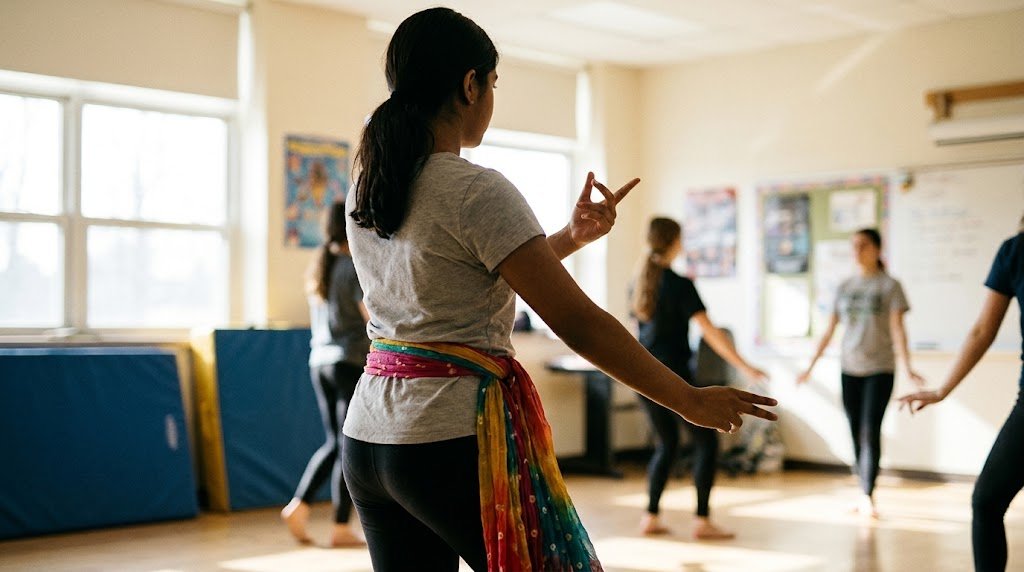
Teenage anxiety and low mood are rising across the US, and schools are searching for ways to help that go beyond talking therapies. A new pilot study suggests that learning an ancient Indian dance form in the classroom may offer young people a practical and enjoyable boost to their mental health.
Researchers at Northwestern University and Yale University tested an eight-week Bharatanatyam programme with 46 first-year students at a Midwestern high school. Bharatanatyam is a classical dance from Tamil Nadu in southern India that combines rhythmic footwork, hand gestures and storytelling. The findings were published in Global Advances in Integrative Medicine and Health.
Students attended 45-minute sessions as part of a school health course. Around 25–30 minutes were spent learning movements, with the rest given over to guided reflection and group discussion about emotions, personal experiences and cultural differences. The classes were led by a trained Bharatanatyam dancer, who is also the study’s first author.
Participants completed standard questionnaires at the start, at the midpoint and at the end of the programme. By week eight, they reported meaningful reductions in anxiety, depressive symptoms, fatigue and pain intensity. They also reported better relationships with peers and a greater appreciation of their own bodies.
The changes were substantial in statistical terms. Anxiety scores and body appreciation showed some of the largest improvements, while peer relations and pain intensity also moved strongly in a positive direction. Students additionally showed higher levels of mindfulness and stronger anti-bias attitudes, meaning greater awareness of their own views about other cultures.
Interestingly, the researchers found that students whose anti-bias attitudes grew the most also tended to show the biggest improvements in anxiety, depression, fatigue and pain. Increases in awareness of bodily sensations were linked to greater body appreciation. The team suggests that sharing cultural stories and reflecting together may have created a more supportive, trusting environment.
The programme proved practical to run. Retention was high, with 83 per cent of students completing the four-week assessment and 89 per cent completing the final one. Around two-thirds said the course had been helpful and that they were satisfied with it, although the authors described acceptability as modest and suggested a shorter format might work better.
The authors are clear about the limits of their work. There was no control group, so the improvements cannot be firmly attributed to the dance programme itself, and the sample was small and largely white and female. Parents also had to give consent, which may have skewed the group towards families already open to new activities.
Even so, the researchers say the results justify further testing in larger, more rigorous trials. With schools under pressure to support adolescent mental health, culturally grounded, movement-based programmes could add welcome variety to the options available.


