
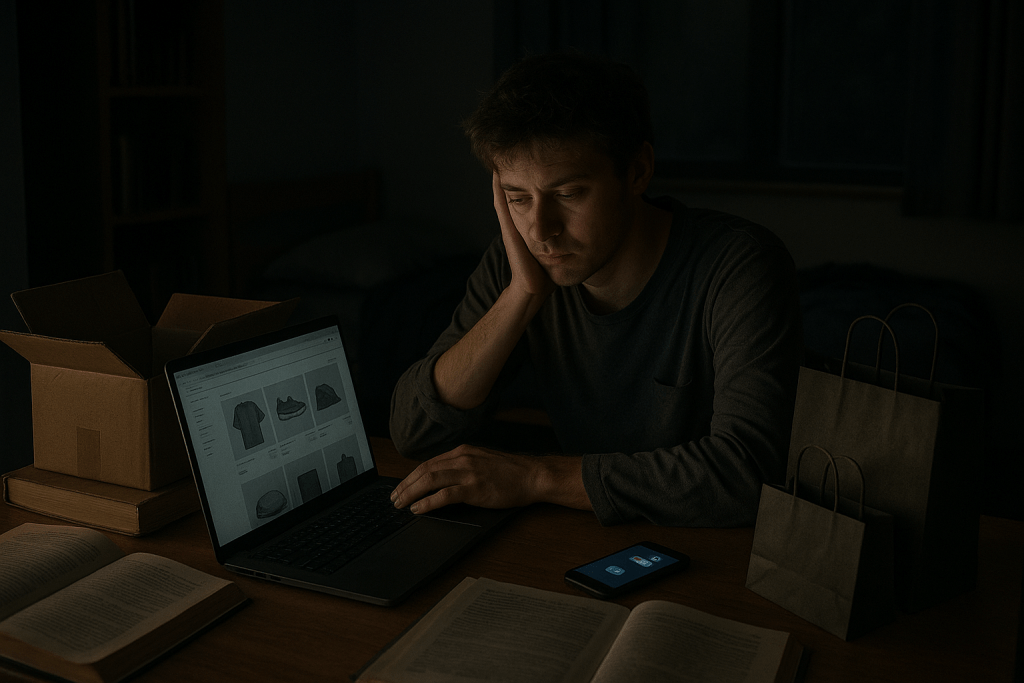
In my first piece in this series, I looked at why we enjoy browsing even when we buy nothing. Comparing products, imagining what we might own and stumbling on something unexpected can all bring a small thrill, and that is part of ordinary consumer behaviour. It should not, on its own, be read as a sign that anything is wrong.
Shopping becomes a problem when buying slowly shifts from something we choose to do into something we struggle to stop. Some people start shopping to cope with stress, loneliness, disappointment, anxiety or other uncomfortable feelings. A purchase can bring quick relief, much like the brief lift of retail therapy that rarely fixes the sadness underneath, but repeated buying can eventually lead to money worries, emotional distress and conflict at home.
The key question is not how much someone shops. It is whether the habit interferes with daily life, personal responsibilities, financial stability and psychological well-being.

What compulsive buying-shopping disorder looks like
Compulsive buying-shopping disorder (CBSD), which people sometimes informally call shopping addiction, describes a lasting pattern of excessive or poorly controlled buying that causes real distress or difficulty. It can involve repeated urges to buy, trouble resisting opportunities to shop, and carrying on spending despite the consequences. Some people buy things they do not need, collect possessions they never use, hide what they spend, or run into money trouble again and again. Others spend a great deal of time thinking about shopping, hunting for products or looking forward to the next purchase.
Even so, the occasional impulse buy, enjoying nice things, or shopping often does not automatically point to a disorder. A proper clinical assessment looks at how long the behaviour has lasted, how much control the person has over it, its emotional and practical effects, and other possible explanations, including mood disorders. Researchers have highlighted emotion regulation, buying urges and difficulty controlling purchases as central to understanding the problem, as a 2022 review of compulsive shopping sets out.
The emotional cycle behind compulsive shopping
Shopping can become a way of responding to emotional discomfort. A stressed person might buy something to feel better, while someone else browses online shops to fill the boredom or loneliness of an evening. Another person may link new possessions with confidence, achievement or a fresh sense of who they are. The pattern often runs like this:
- Emotional trigger: Stress, disappointment, loneliness, anxiety or boredom
- Anticipation: Searching for products and imagining how good it will feel to buy them
- Purchase: A burst of excitement, relief or short-lived satisfaction
- Aftermath: Possible regret, guilt, money worries or disappointment
- Repetition: Going back to shopping when the uncomfortable feelings return
Not everyone who shops goes through this cycle, and it should not be treated as a universal explanation. Understanding how feelings and buying are connected for a particular person, however, can help shape treatment that fits them.
How family, partners and friends can help
Compulsive shopping rarely affects only the person doing it. Money problems, secrecy, arguments about spending and household responsibilities left undone can all put strain on families and close relationships. Partners, relatives and friends can help someone notice harmful patterns and seek professional support. Depending on the situation, that might mean talking openly about financial priorities, agreeing spending limits together, encouraging someone to keep going with treatment, and finding enjoyable things to do that do not involve buying.
That involvement needs to stay respectful and collaborative. Harsh criticism, humiliation, threats or controlling behaviour can deepen shame and make honest conversation less likely. Support does not mean taking away someone’s independence; it means helping to create conditions where accountability, trust and recovery can grow. Family therapy or couples counselling can be useful when shopping has damaged relationships, and financial counselling can sit alongside psychological treatment when debt or household money problems are part of the picture.
Different people, different treatment needs
The three examples below are hypothetical. They illustrate experiences people might have, and they do not describe real patients or recorded treatment outcomes.
- Repeated online purchases: After stressful days at work, a person starts buying things they do not need. Over time the purchases grow, and embarrassment leads them to hide what they spend. Treatment might focus on spotting emotional triggers, strengthening impulse control and building healthier money habits.
- Shopping to manage difficult feelings: Another person browses online shops whenever they feel lonely or anxious. Buying brings a brief lift, but the discomfort comes back afterwards. Psychotherapy might help them identify the emotional needs that are going unmet and find other ways of coping.
- Recovery with support: A third person realises that repeated purchases are hurting their finances and relationships. With professional help and the cooperation of a trusted family member, they begin tracking their urges to shop, setting realistic spending goals and practising different responses to distress.
These examples show why treatment needs to be tailored. The same behaviour can have quite different motives and consequences from one person to the next.
How psychotherapy helps
Psychotherapy is an important treatment option for compulsive buying-shopping disorder. Cognitive behavioural therapy (CBT) has had particular research attention because it helps people recognise unhelpful thoughts, notice what sets off their urges and develop other ways of coping. Therapy might involve:
- Recognising the situations and emotions that make buying urges stronger
- Examining beliefs that link buying with personal satisfaction
- Practising delaying decisions and managing impulses
- Building skills for regulating emotions
- Setting realistic financial and behavioural goals
- Working through shame, secrecy and relationship difficulties
- Planning how to spot and manage the risk of relapse
Research suggests that CBT, including group-based programmes, may reduce symptoms of compulsive buying. The evidence is still limited, though, and a 2023 systematic review of treatment studies concluded that more research is needed to show which approaches work best for which people.
Looking at the person, not just the purchases
In my own work, I try to understand the emotional and behavioural processes that shape a person’s everyday decisions. When it comes to compulsive shopping, that means focusing on the individual rather than defining them by what they buy. The aim of treatment is not necessarily to stop someone shopping altogether. It is to help them understand their motives more clearly, recognise their emotional triggers and get back the ability to make deliberate choices.
Talking therapy gives people room to explore their experiences, emotional needs, ways of coping and patterns in their relationships. Working together with a therapist, they can find healthier ways of responding to stress and depend less on repetitive buying. I would add one note of caution: a clinician’s philosophy or credentials are not evidence of results in themselves, and claims about successful outcomes should rest on documented clinical data that can be ethically published.
What the evidence says about medication
Medication has also been studied as a treatment for compulsive buying-shopping disorder. Researchers have looked at antidepressants and other psychiatric medicines, but the findings have been mixed, and no medication has yet been shown to treat the disorder reliably across different people.
That does not mean medication has no place in mental health care. Some people also live with depression, anxiety or other conditions that deserve their own assessment and treatment, and a qualified prescriber can judge whether medication is appropriate for a particular person. The current evidence supports psychotherapy, especially CBT, as an important approach. It does not support the idea that medication always fails, or that therapy guarantees recovery. Treatment decisions should reflect each person’s needs, a careful clinical assessment and the best available evidence.
Recovery means getting your freedom to choose back
Recovery is not about stopping people from enjoying shopping. Shopping can stay a pleasant leisure, social or practical activity when it fits a person’s needs and finances. It becomes a concern when buying is hard to control and starts to affect emotional well-being, relationships or daily responsibilities.
With the right professional support, family involvement where it helps, and treatment shaped around the individual, people can build a healthier relationship with spending. They can learn to admire things without feeling driven to buy them, to notice emotional triggers without automatically acting on them, and to find satisfaction in activities that cost nothing. Shopping becomes a problem not because people enjoy buying things, but when buying starts to control choices that should remain their own. The most meaningful result of treatment is not an empty basket; it is getting back a sense of control, emotional balance and the freedom to choose.


