
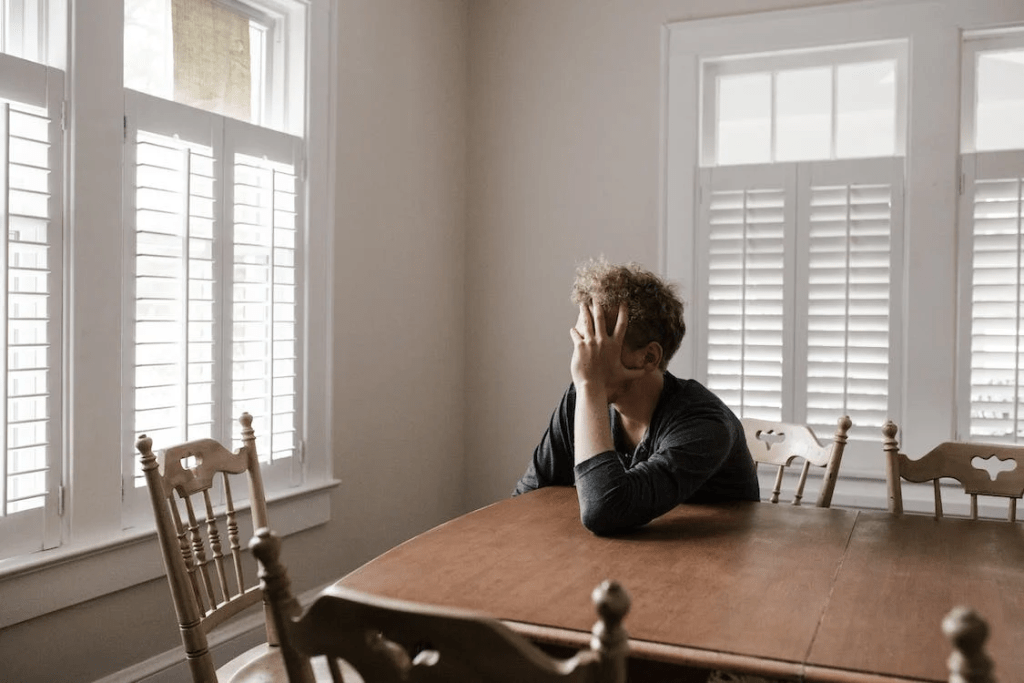
The alarm goes off after a full eight hours, and you still feel like you’ve been hit by a bus. Coffee helps until mid-morning, then the fog rolls back in. If you keep asking yourself “why do I feel tired all the time?”, the answer often starts in the mind, well before any blood test.
Both the NHS and the British Heart Foundation list stress and low mood among the most common causes. As the BHF’s senior cardiac nurse Regina Giblin puts it, “Stress, anxiety and low mood can all contribute to tiredness too.”
This guide works through the mind first, then sleep quality, then the body, and finally the science of how the brain controls sleep.
Why do I feel tired all the time?
Feeling tired all the time usually comes from one or more of four sources: psychological strain such as stress or low mood, poor-quality sleep, everyday habits like irregular hours and late screens, or an underlying medical condition. Often two or three overlap, which is why one fix rarely clears it.
The same goes for the related question, “Why am I so tired and have no energy?” A lack of energy usually points to the same four sources, with mental load the one people most often overlook. Dr Luke Powles, a clinical director at Bupa, writes that “coping with stress during difficult times can be very tiring.” Fresh research backs that up: a May 2026 systematic review in BMC Psychiatry (Klein Olsen and colleagues, 46 studies) found fatigue in 18% to 100% of patients across common mental health conditions.
Tiredness vs fatigue: What’s the difference?
Tiredness is the normal heaviness after a long day, and a good night’s rest clears it. Fatigue is a persistent lack of energy that rest doesn’t touch.
Fatigue comes in two main forms, often at once:
- Mental fatigue: Foggy thinking, slow decisions, and trouble concentrating.
- Physical fatigue: Heavy limbs and low stamina, even for small tasks.
On “What are 5 symptoms of fatigue?”, NHS guidance links ongoing tiredness with low energy, mood changes, memory and concentration problems, waking up in the night and muscle weakness, depending on the cause.
Four types of tiredness: mental, emotional, physical and sleep-related
The psychological causes of feeling tired all the time
Stress and the “tired but wired” state
Under ongoing stress, the body’s alarm system stays switched on. Cortisol normally peaks in the morning and falls through the day. A 2017 meta-analysis led by Emma Adam at Northwestern University found that a flatter daily cortisol curve was linked to poorer mental and physical health outcomes.
That flattened rhythm helps explain the strange combination many people describe: exhausted by evening, yet wide awake the moment their head hits the pillow, with the day’s to-do list on replay.
Depression and low mood
Fatigue or loss of energy nearly every day is one of the listed symptoms of depression in the DSM-5, the diagnostic manual psychiatrists use. The 2026 BMC Psychiatry review also found the link runs both ways: fatigue can come before depression, and depression can bring on fatigue.
If tiredness comes with flat mood, loss of interest or hopeless thoughts, Mind and the NHS both offer clear next steps. Low mood also has seasonal patterns, which Psychreg explores in Why Do I Feel Depressed in November?
Burnout and emotional exhaustion
The World Health Organization’s ICD-11 describes burnout as “resulting from chronic workplace stress that has not been successfully managed.” It has three parts: energy depletion or exhaustion, mental distance or cynicism about the job, and reduced professional efficacy.
The WHO uses the term for work only. Caring for a relative, emotional workload in helping jobs, and grief can all produce a similar draining exhaustion, and the NHS names caring and bereavement among common causes of tiredness.
Mental fatigue and decision overload
Hard thinking can tire you out physically. In a 2022 Current Biology study, Antonius Wiehler and Mathias Pessiglione at the Paris Brain Institute found that after a day of demanding mental work, volunteers had more glutamate in a decision-making region of the brain and made more impulsive choices.
Switching between screens, meetings and messages adds to the load, and so does rumination. The popular idea that willpower simply “runs out” is less settled: a 23-lab replication in 2016 (Hagger and colleagues, 2,141 participants) found an effect close to zero, so researchers still debate how decision fatigue works.
The two-way link between sleep and mental health
So what is the connection between sleep and mental health? It runs in both directions. Poor sleep makes low mood and worry worse, and low mood and anxiety make it harder to fall and stay asleep, as Mind’s guide to sleep and mental health explains.
The numbers are striking. A 2005 study published in Sleep found people with insomnia were 9.82 times as likely to have clinically significant depression and 17.35 times as likely to have clinically significant anxiety.
The hopeful side comes from treatment trials. A 2021 meta-analysis published in Sleep Medicine Reviews pooled 65 randomised controlled trials with 8,608 human participants. Improving sleep led to a medium-sized improvement in overall mental health, including depression, anxiety and rumination, and bigger sleep gains went with bigger mental health gains.
Does lack of sleep cause anxiety, then? The evidence shows the two are closely linked and feed each other. Short sleep can make anxious feelings sharper, and anxiety can keep sleep light and broken, so the cycle can start at either end.
Why am I always tired if I sleep enough?
Sleep quality counts more than hours
Eight hours in bed is a different thing from eight hours of restful sleep. Frequent waking, light sleep and too little deep sleep can all leave you groggy after a “full” night. Psychreg looks at the opposite puzzle in Why Do I Feel More Tired After Sleeping Longer.
Sleep apnoea, where breathing pauses during sleep, is one cause people often miss. The NHS advises seeing a GP if you’ve been told you make gasping, snorting or choking noises in your sleep. On Reddit, people who say they sleep eight hours and still wake exhausted often describe the same turning point: a GP referral for a sleep study.
Your body clock, screens and “social jet lag”
Your body clock runs on a roughly 24-hour rhythm set mainly by light. Late nights in the week and long lie-ins at the weekend pull it back and forth, a pattern chronobiologist Till Roenneberg at Ludwig Maximilian University in Munich named “social jet lag.” His team estimates it affects about two-thirds of people in Western societies.
Evening screens add to the drift because bright light late at night tells the brain it’s still daytime. The NHS suggests avoiding smartphones and screens in the hour before bed.
Physical causes a GP may check
When tiredness drags on, a GP can rule out common physical causes. Typical checks include:
- Iron levels and anaemia
- Vitamin B12 and vitamin D
- Thyroid function
- Blood sugar, for diabetes
- Medicines you take, since tiredness is a common side effect
This is the medical answer to “What is my body lacking if I feel tired?” A GP can test for a deficiency directly, which beats guessing.
What if the blood tests come back normal? That’s common, and it’s useful information. It points back to the mind and sleep quality, which is where many cases of constant tiredness turn out to start.
The science of sleep regulation: What researchers are studying
Researchers describe sleep with a two-part model, first set out by Alexander Borbély in 1982. “Sleep pressure” builds the longer you’re awake, partly as the brain chemical adenosine accumulates. Separately, the body clock sets the times you feel alert or drowsy. You sleep best when both line up.
Scientists have also looked for molecules that might signal sleep. In 1977, Swiss researchers Guido Schoenenberger and Marcel Monnier isolated a nine-amino-acid peptide from rabbits and named it delta sleep-inducing peptide (DSIP). The early work was in animals, and later small human studies produced mixed results. Decades on, its natural role is still not well understood, and the gene and receptor behind it have not been identified.
DSIP remains a tool for basic sleep research, and synthetic versions are available to laboratories through research peptides UK suppliers, including DSIP, supplied strictly for laboratory research.
These compounds are for research use only and are not intended for human consumption.
What can help: Evidence-based steps
The NHS self-help advice for tiredness centres on steady habits:
- Do: Keep regular sleep and wake times, get morning daylight, stay active, eat well and keep the bedroom calm, dark and cool.
- Don’t: Drink heavily, or have caffeine, big meals or hard exercise in the hours before bed.
- Set work boundaries: A hard stop on emails gives your mind a chance to wind down.
For stress, anxiety or low mood, you can refer yourself to NHS Talking Therapies in England. For long-term insomnia, cognitive behavioural therapy for insomnia (CBT-I) is the recommended first approach, and NICE has recommended the digital CBT-I programme Sleepio for use in primary care.
Red flags: When to see a GP
The NHS advises seeing a GP if:
- You’ve felt tired for a few weeks and aren’t sure why
- Tiredness is affecting your daily life
- You have other symptoms, such as weight loss or mood changes
- You’ve been told you make gasping, snorting or choking noises in your sleep
If you need medical help fast and it isn’t an emergency, call NHS 111. If you’re struggling to cope or having thoughts of harming yourself, Samaritans is free to call 24 hours a day on 116 123.
FAQs
- At what age do you get tired easily? There’s no single age. The NHS links tiredness to hormonal changes at several life stages, including puberty, pregnancy and menopause, and to big life events such as caring for a newborn.
- Can stress make you tired all the time? Yes. Stress drains energy through several routes at once: constant alertness, broken sleep and the mental effort of worrying. A fixed wind-down time each evening gives that alarm system a chance to settle.
- Why do I feel tired after eight hours of sleep? One overlooked reason is sleep inertia: waking from deep sleep leaves the brain groggy for a while, usually under an hour. If the heaviness lasts all day, think about sleep quality and mention any snoring to a GP.
- Can boredom make you feel tired? Yes. Boredom is a low-energy state, and dull, repetitive tasks can make people feel sleepy. The feeling usually lifts once something engaging comes along, which helps tell it apart from fatigue.
Takeaway
Constant tiredness is your mind and body flagging that something needs attention. Look at stress and mood, sleep quality and physical health together, and book a GP appointment if it hasn’t eased within a few weeks.


