
Original studyFrontiers in Psychology, 2026Read the paper →
Psychological distress is common in later life, often tied to low mood, anxiety, and poor sleep as bodies and social roles change. Many older people look for gentle, non-drug ways to feel steadier. A new Chinese survey of regular Tai Chi practitioners suggests that doing more of this mind-body exercise goes with less psychological distress.
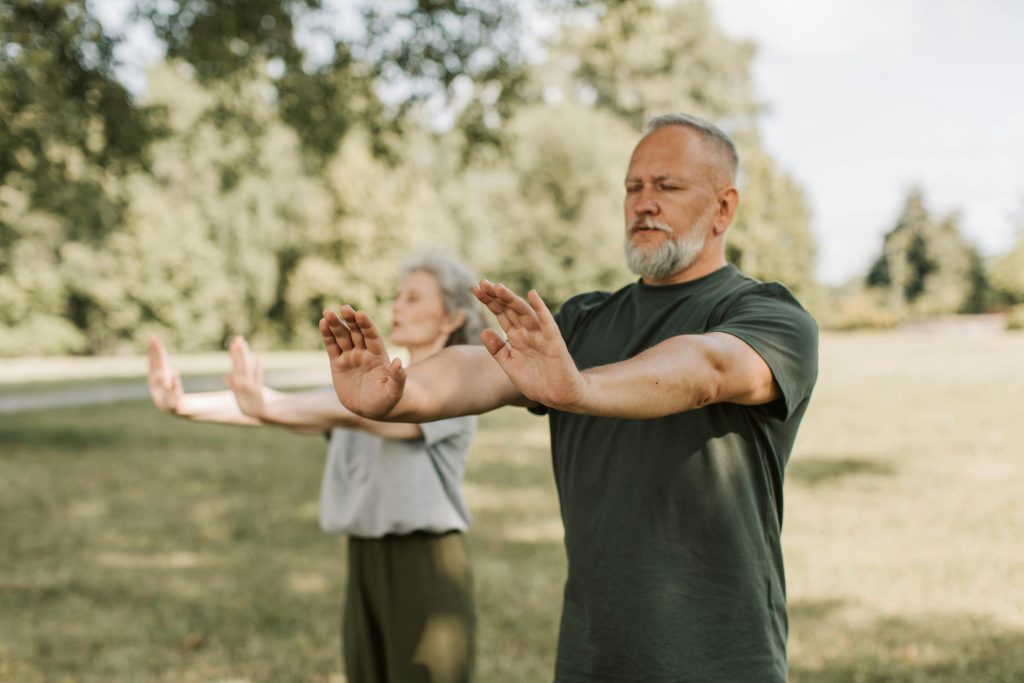
Researchers at Hefei College of Finance and Economics and Hunan Traditional Chinese Medical College surveyed 457 adults aged 60 and over living in Changchun. The study appears in Frontiers in Psychology. All participants had practised Tai Chi as their main exercise for at least three months, at least once a week.
Questionnaires were handed out on site between July 2025 and February 2026. Of 500 forms issued, 469 were returned, and 457 were usable after incomplete or repetitive answers were dropped. Just over half the sample were women, and the average age was about 68.5 years.
People typically practised about three to four times a week for around 41 minutes a session, and had been practising for nearly five years on average. The most common form was 24-form Taijiquan, followed by Yang-style and Chen-style. Anyone who regularly did other moderate-to-high-intensity exercise was excluded, so the focus stayed on Tai Chi rather than mixed activity.
Psychological distress was scored with a ten-item scale covering anxiety, low mood, and day-to-day strain over the past month. Mood state was measured with a standard profile that captures tension, fatigue, and other negative feelings alongside energy; higher totals mean a more negative mood. Sleep quality was measured with the Pittsburgh Sleep Quality Index, on which higher scores mean worse sleep.
People who reported more Tai Chi practice tended to report less negative mood, better sleep, and lower psychological distress. Negative mood and poor sleep were each linked with higher distress, and with each other. Gender was taken into account in the later models.
When mood and sleep were modelled together as pathways, just over half of the overall link between Tai Chi practice and distress ran through them. The largest indirect path ran through mood alone, a smaller path ran through sleep alone, and a further path ran from mood to sleep and then to distress. A direct link between more practice and lower distress remained after these paths were taken into account.
Tai Chi volume was scored from intensity, session length, and weekly frequency on an adapted activity scale that asked only about Tai Chi, not walking or other exercise. Average scores put the group in the moderate activity band on that scale. Mean distress sat in the mild range on the ten-item measure, and mean sleep scores pointed to mild sleep disturbance.
The study has clear limits. It used convenience sampling in one city and a single survey wave, so it cannot show whether more practice reduces distress, whether calmer people practise more, or whether both track something else. Answers were self-reported, social support, long-term illness, and family context were not measured, and mood and distress scales share some emotional content, which may inflate their link.
Earlier reviews already link Tai Chi with better mood and sleep in older adults. This survey adds a possible chain in which mood and sleep sit between practice volume and distress, but trials that follow people over time are needed before cause and effect can be claimed.


