
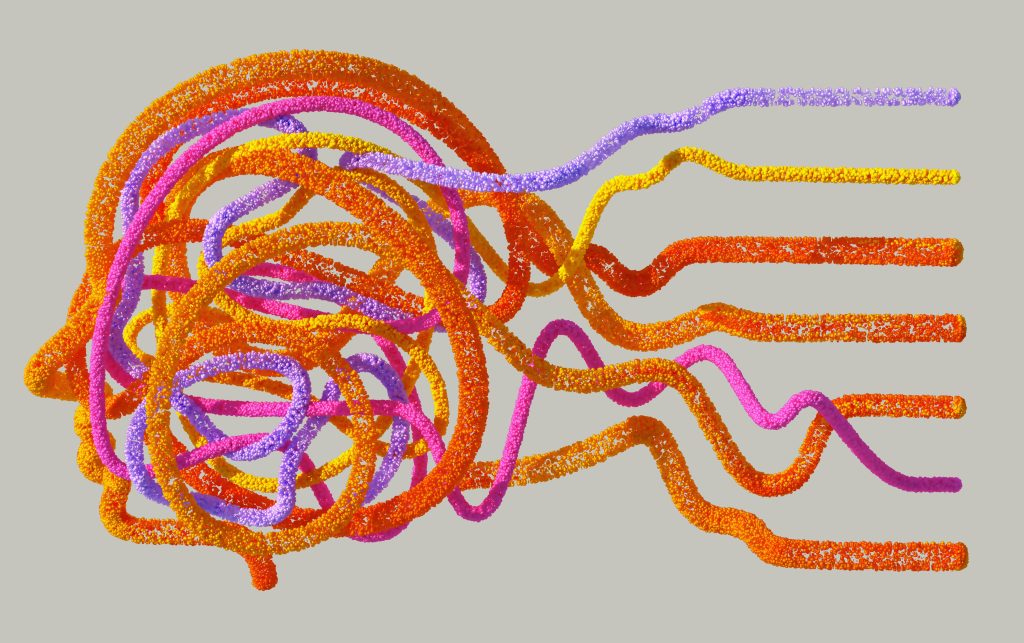
You have set your alarm, laid out your workout clothes and promised yourself that you will start exercising tomorrow. But when the alarm goes off at 6am, getting up feels almost impossible, your warm bed looks far more appealing than the workout, and you avoid the very things you were so determined to do the night before.
Now think of someone who has followed the same routine for months. For them it has become normal, and they get through their tasks without any hesitation. What makes one person struggle even to start a task that another person does with no difficulty? Is it just discipline or motivation, or is something in the brain involved too, and why is building habits not about discipline and willpower alone?
The gap between intention and action
There is a real difference between intention and action. A thought about doing something stays an intention until you decide to act on it, and only action gets anything done. This is where the prefrontal cortex comes in, the part of the brain that helps you remember what you decided, stay focused, and choose that plan over something more tempting.
Even so, conscious control has its limits. Unexpected work, changing priorities, and distractions can all get in the way of a daily routine, and each time we have to decide again whether to carry on or not, which fits into the wider debate about whether willpower really behaves like a muscle that runs out. You cannot build a habit by making a conscious effort just once, because to make a task part of your life you have to repeat it consistently.
How consistency turns actions into habits
The circumstances in which you do something matter, not just how many times you do it. Take going to the bathroom first thing after waking up: over time your brain has learned that waking up is the signal for it, so you do not have to decide to do it.
To see how a habit develops, Phillippa Lally and her colleagues followed 96 volunteers for 12 weeks in a study published in 2010. Each person chose an everyday behaviour related to eating, drinking, or physical activity and tried to do it consistently in the same situation. The researchers estimated that it took people anywhere from 18–254 days to reach 95% of their own peak automaticity, so the range was very wide. Doing something every day can make it automatic, but there is no fixed number of days, and it depends on the person and how long they take to adapt. The same study found that missing one opportunity did not materially affect the process, which is worth remembering on a difficult day.
Why a strong habit needs less willpower
We tend to assume that people who follow a routine are very disciplined, but that is not entirely true. At first you do have to repeat the task, and that takes self-control and conscious effort. Once it becomes a habit you no longer have to decide to do it each time, much like the many daily activities you already do without thinking, which also helps explain why the brain tends to favour established routines over new ones that demand more effort.
Neuroscience helps explain the difference between conscious action and routine action. Yin and Knowlton’s 2006 review of the basal ganglia describes how behaviour that starts as a goal-directed action can become an automatic response to a cue, as control shifts from one cortico-basal ganglia network to another. So the task you want to do has to become natural behaviour, something you can perform automatically in the right situation rather than getting distracted. That raises a practical question: what can you do to perform a task consistently until it turns into a habit?
Making good habits easier to repeat
In 2006, psychologists Peter Gollwitzer and Paschal Sheeran pooled the results of a meta-analysis of 94 independent tests and found that you can make a behaviour easier to repeat with a strategy called implementation intentions, or if-then planning. For example, you might decide that if you finish lunch, then you will read 10 pages of a book. On average, this kind of planning improved people’s chances of reaching their goals.
You can also shape your environment to help you repeat a habit consistently, because habits tend to be triggered by recurring cues in our surroundings. Keeping a book in sight as a reminder to read, or removing distractions while you work towards a specific goal, can be a real help. This does not guarantee that a habit will form, but it can make the action easier to repeat and help you build consistency.
What this means for building a new habit
According to neuroscience and psychology, you do not need to rely on willpower alone. What you need is conscious effort and consistency until the activity becomes automatic and you no longer have to force yourself to do it. It can be slow, and some days will still be hard, but one bad day does not make you inconsistent, so do not dwell on it and simply do it the next day.
FAQs
- How long does it take to build a habit? There is no fixed number of days. In the 2010 study by Lally and colleagues, people took anywhere from 18–254 days to reach 95% of their own peak automaticity, and it depended on the person and how long they took to adapt.
- Do you need willpower to build a habit? At first, yes, because repeating a task takes self-control and conscious effort. Once the task has become a habit, you no longer have to decide to do it each time, so it needs far less forcing.
- What if you miss a day? One bad day does not have to derail you. The Lally study found that missing one opportunity did not materially affect the habit-forming process, so the useful response is to pick it up again the next day.
- How can you make a habit easier to repeat? Try an if-then plan, such as deciding that if you finish lunch, then you will read 10 pages of a book, and arrange your surroundings so the cue is easy to see and distractions are out of the way.
Takeaway
Building a habit is not about getting better at forcing yourself. It is about repeating an action in the same situation until it needs less forcing, with a little planning and a supportive environment to help along the way.


