
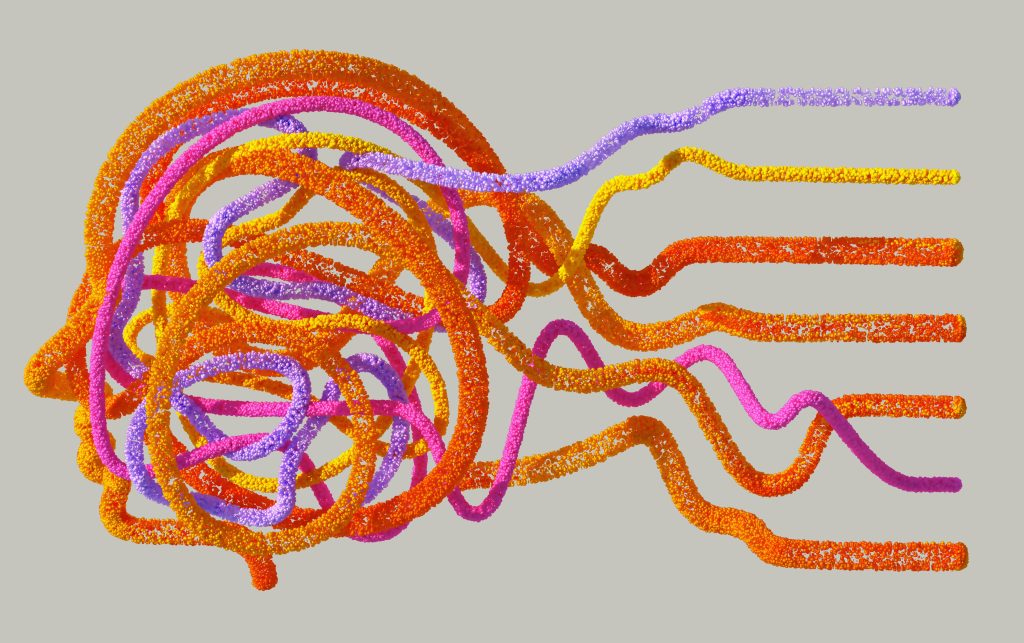
What does schizophrenia feel like? There is no single answer, because Mind and Rethink Mental Illness both stress that each person’s experience is different. Short films that try to recreate it have spread widely online, and they can open a conversation, but a clip of a few minutes can only show a small slice of a condition that people live with for years.
This article explains what people with schizophrenia can experience, what simulator-style videos tend to get right, and what they leave out. It is general information, not a way to judge what someone else is going through, and it is not a substitute for professional advice.
What does schizophrenia feel like for the people who live with it?
Rethink Mental Illness says schizophrenia affects the way you think, feel, and behave, and that it affects about 1 in every 100 people. The NHS describes it as a long-term mental health condition and often a type of psychosis, which means a person may not always be able to tell their own thoughts and ideas from reality. A diagnosis does not mean every symptom is present: Rethink says not everyone with schizophrenia will have hallucinations or delusions.
Doctors often group symptoms as positive and negative, and the words do not mean good and bad. Mind explains that positive symptoms add to everyday experience, while negative symptoms take something away. The next sections look at each, plus the changes in thinking that sit between them.
Hallucinations: when the senses add something
The NHS says hallucinations are when someone sees, hears, smells, tastes, or feels things that do not exist outside their mind. Hearing voices is the most common, and the experience is very real to the person, even though others cannot hear them. Voices may be friendly, but more often they are described as critical or annoying, and they may comment on what someone is doing or give instructions.
Hallucinations are not always frightening or a sign of schizophrenia. Mind notes that many people hear voices without having a mental health problem, and that some people find them comforting. Rethink adds that voices can be male or female, whispering or shouting, familiar or unfamiliar, and heard some of the time or all of the time.
Delusions: beliefs that feel completely certain
A delusion is a belief held with complete conviction, even though others see it as mistaken or unrealistic. The NHS gives examples such as believing you are being followed, watched, or plotted against, or that messages in the news or on television are meant for you alone. Some people also feel that their thoughts are controlled by someone else or that thoughts have been put into their mind.
From the inside, a delusion does not feel like a mistake. As Rethink puts it, you have no doubts, even when other people see the belief as wrong, which is one reason a delusion is so hard to capture in a film. Rethink adds that some people can stay in work and function well despite these experiences.
Disorganised thinking: trouble following your own thoughts
People with psychosis can find it hard to keep track of their thoughts and conversations. The NHS says some people drift from one idea to another, find it hard to concentrate, or describe their thoughts as “misty” or “hazy”. Speech can become jumbled, which makes conversation hard for other people to follow and can add to feelings of confusion.
Rethink adds that this can make it harder to work, study, read, or watch television, so it affects daily life as well as conversation. It is also hard to put on screen.
Negative symptoms: the quieter changes people may not see
Negative symptoms are about loss rather than addition. Rethink lists lack of motivation, losing interest in activities, not wanting conversations, feeling that you have nothing to say, and poor grooming among them, and says they often last longer than positive symptoms. The NHS adds that they can appear months or years before a first acute episode.
Because they are quiet, negative symptoms are often misread. The NHS says they can sometimes be mistaken for deliberate laziness or rudeness, which can lead to relationship problems with friends and family. If someone you know seems withdrawn or flat, it may be a symptom, not a choice, and a kind, patient approach helps more than pressure.
What a viral schizophrenia simulator tends to get right
Simulations are not made by one group or built to one standard, and this article makes no claims about any particular video or its creator. At their best, they give a sense of sensory and mental overload. Imagining voices talking over you while you try to do a simple task makes it clearer why concentration, study, and work can become hard.
They can also hint at how real the experience feels from the inside, as the NHS describes, and for friends and family that glimpse can replace fear with understanding. That matters because stigma is a real burden: Rethink says media coverage can create fear, and Mind notes that the diagnosis can be a stigmatising and difficult label to live with.
What a viral schizophrenia simulator gets wrong or leaves out
The first limit is that a film cannot be everyone’s experience. Mind says each person’s experience is unique, and Rethink says not everyone has all the symptoms, so a single portrayal will match some people and miss others entirely.
The second limit is that short videos lean towards hallucinations, because sights and sounds are the easiest things to put on screen. Quieter symptoms, such as low motivation, flat emotions, and trouble thinking clearly, are much harder to show, yet Rethink says negative symptoms often last longer than positive ones.
The third limit is that symptoms are not constant. The NHS says people often have episodes in which symptoms are particularly severe, followed by periods with few or no symptoms. A clip that makes every moment look frightening misses the days that feel ordinary, and the fact that many people recover.
The fourth and most important limit is the picture of people with schizophrenia. The NHS says they do not have a split personality and that schizophrenia does not usually cause someone to be violent. Rethink adds that people with schizophrenia are far more likely to be harmed by others than to harm them, and Mind says most people with schizophrenia do not commit violent crimes. Any film that suggests otherwise adds to the stigma.
Treatment and recovery
The NHS says many people recover from schizophrenia, although they may have periods when symptoms return. It is usually treated with a combination of medicine and therapy tailored to each individual, usually antipsychotic medicines and cognitive behavioural therapy, and many people get day-to-day support from a community mental health team. Mind says it is possible to manage symptoms with the right self-care, treatment, and support, even if they do not disappear completely.
The NHS also says that the earlier schizophrenia is treated, the better. If you want to understand more, a related read on how people with schizophrenia experience the world goes further into lived experience, and a guide to the symptoms of schizophrenia lists the main signs.
How to talk about it and where to get help
- Use person-first language: Say “a person with schizophrenia” or “someone living with schizophrenia”, not “a schizophrenic”.
- Do not treat a video as a diagnosis: Seeing a simulation and recognising something in it is not a reason to label yourself or anyone else.
- Listen first: If someone describes what they experience, believe that it feels real to them, and ask what helps.
- Support access to care: If someone seems unwell, encourage them to see a GP, and stay with them if they want company.
If you are worried about your own experiences or someone else’s, see a GP as soon as possible, as the NHS advises. Mind and Rethink Mental Illness both publish free information, and the Rethink guide to schizophrenia and Mind’s guide to understanding schizophrenia are good places to start.
For urgent mental health help, use NHS 111 online or call 111 and choose the mental health option. If someone’s life is at risk or you do not feel you can keep yourself or someone else safe, call 999 or go to A&E now.
FAQs
- What does schizophrenia feel like? It differs from person to person. Some people hear voices or see things others do not, some hold beliefs that feel completely certain, some find their thoughts jumbled, and some lose motivation or feel disconnected from their emotions.
- Are schizophrenia simulators accurate? It depends on the person and the video. Experience varies, so a single film can match some people’s experience and miss others’, and short videos tend to show hallucinations far more than the quieter symptoms.
- Do people with schizophrenia have a split personality? No. The NHS says people with schizophrenia do not have a split personality, and Mind says schizophrenia has nothing to do with personality or identity.
- Are people with schizophrenia dangerous? No. The NHS says schizophrenia does not usually cause someone to be violent, and Rethink says people living with it are far more likely to be harmed by other people than to harm others.
- Can people recover from schizophrenia? Many do. The NHS says many people recover, although symptoms can return, and treatment with medicine, therapy, and support can reduce the impact on daily life.
- What should I do if I think someone has symptoms? Encourage them to see a GP as soon as possible, as the earlier it is treated the better, and be patient and non-judgemental. For urgent help call NHS 111 and choose the mental health option, and call 999 if a life is at risk.
Takeaway
Schizophrenia can involve voices, unusual beliefs, jumbled thinking, and quiet losses of motivation and emotion, but it looks different for each person. Viral simulators can show how overwhelming some experiences feel, though they miss the quieter symptoms, the good days, and the many people who recover. Treat any single portrayal with care, use person-first language, and if you are worried about yourself or someone else, see a GP or call NHS 111.


