
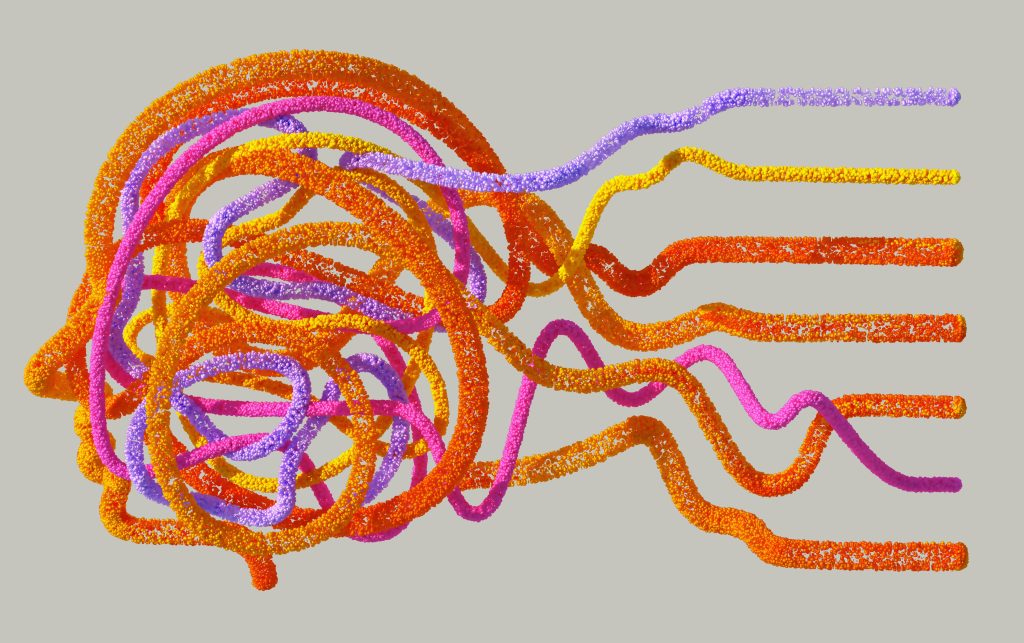
I have lived in two worlds: the one everyone sees and another that flickers just beneath the surface. For years, I was told my visions and voices were nothing but symptoms, things to be silenced or ignored. But I have come to understand that what I see is not brokenness. It is connection. It is truth. And in that truth, I found my purpose.
It began with my art.
I painted what I saw: intricate, luminous webs stretching between all living things, pulsing with quiet energy. At first, people dismissed my work as the product of a troubled mind. But something in those paintings resonated. Strangers would stop, their eyes filled with something I could only describe as recognition.
One evening at an exhibition, a woman stood before one of my pieces and wept. I later learned she was a psychiatrist. After the show, she sought me out and said something I will never forget: “These aren’t delusions. They’re visions we have forgotten how to see.”
From that moment, she and I began a collaboration that brought together artists, poets, musicians, and others like me. We were no longer dismissed. We were heard.
My family didn’t always understand me. For a long time, they were afraid, burdened by stigma and uncertainty. But as my paintings gained recognition, they began to see me in a new light. My sibling, an engineer, was captivated by the patterns in my art, recognising in them the same fractal structures they studied in nature, such as branching trees, river networks, and galaxies. They began incorporating my designs into their architectural work, creating spaces that felt alive.
At conferences, my sibling spoke of me not as someone to be pitied but as their greatest inspiration. Their words changed people. Families who had once seen their loved ones as burdens began to embrace them as guides. The shame surrounding schizophrenia eroded, replaced by something far more powerful: respect.
A philosopher took notice. He posed a question that rippled across the world: “What if schizophrenia is not an affliction but an adaptation? A mind reaching beyond the limits of ordinary perception?”
His words spread. Universities launched studies blending neuroscience, philosophy, and spirituality. The world began to wonder: had we been looking at schizophrenia all wrong?
People listened. We were no longer just patients; we became teachers, storytellers, and guides. No longer seen as broken, we were recognised as visionaries.
I wasn’t alone anymore. Musicians transformed auditory hallucinations into symphonies that stirred the soul. Writers turned delusions into stories of universal love. Communities gathered to honour what had once been suppressed.
For the first time, people saw themselves not as isolated but as part of something greater. The wisdom of those once dismissed as “other” became a guiding force, and everything began to change.
They call this era The Great Shift. Psychiatry evolved. Families healed. Communities flourished, built on love and interconnection rather than fear and division.
I once believed I was lost. But I was never lost. I was seeing something the world had forgotten. And now, at last, the world is beginning to see it too.


