
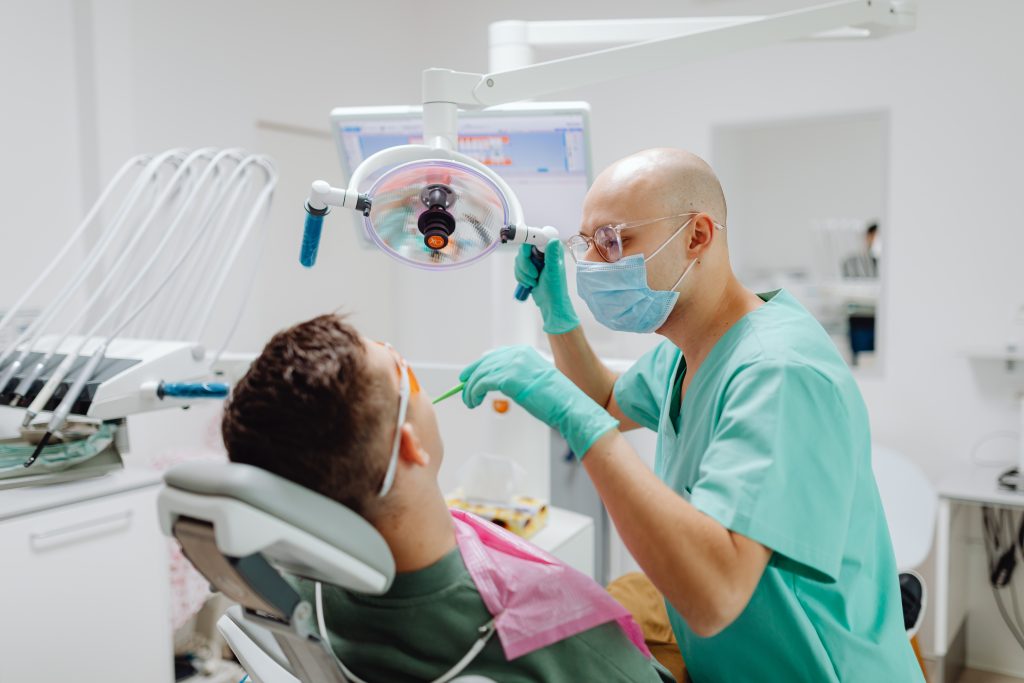
Helping a child who is anxious about the orthodontist usually starts with the parent, because children read the adults around them for clues about how worried they should be.
Most of what lowers that worry before a check-up, a fitting or an adjustment is in your hands. Much of it has been tested, mainly in paediatric dentistry and in studies of children having blood taken.
Start with your own nerves
In 2010, Themessl-Huber and colleagues reviewed 43 studies on parental and child dental fear. Most found a link between a parent’s dental fear and their child’s, and it was clearest in children aged 8 and under.
None of that is a reason for guilt if you hate the dentist yourself. It’s a reason to manage what your child sees and hears from you, for example by:
- Keeping your own stories about painful treatment out of earshot.
- Not using the orthodontist as a threat when your child skips brushing.
- Letting the calmer parent or carer come along, if you have that choice. Psychreg has covered how children can learn fear from adults’ language, including jokes about the dentist made when a child misbehaves.
Tell your child what will actually happen
A first orthodontic consultation is usually photos, X-rays, and an exam rather than treatment.
Use tell-show-do at home
The American Academy of Pediatric Dentistry’s behaviour guidance best practices describe tell-show-do. The clinician explains a step in words that fit the child’s age, shows what it will look, sound, smell and feel like, then does it exactly as described.
You can borrow the “tell” part. Walk through the visit in order, in plain words, and be honest about anything you’re unsure of.
Ask before you explain
The AAPD also lists ask-tell-ask, which opens by asking the child how they feel about the visit. So start by asking your child what they’re picturing, then fill in the gaps.
If you think fear might stop the visit from going ahead, tell the practice when you book. The AAPD asks clinicians to weigh a child’s temperament and past behaviour during treatment when choosing an approach.
Say less “don’t worry”
In a study published in the journal Pain, McMurtry and colleagues filmed 100 children aged 5 to 10 having blood taken with a parent beside them. Earlier work had already tied adult reassurance to more distress in children, and distraction to better coping.
Watching clips of their own parent, the children rated reassurance as more fearful than distraction. In staged videos, an actor’s fearful face pushed the ratings up again.
The team measured perception, not cause, so this doesn’t prove “it’s OK” makes things worse.
What to say and what to skip
- “Don’t worry” on repeat is the one to drop, since that’s the phrase children heard as fear.
- Chat about the level they’re stuck on, or tonight’s film, while you wait.
- Relax your face; the vignette children rated the frightened one as more afraid.
- If they ask whether it’ll hurt, answer briefly and truthfully. Dentists distract children on purpose too. The AAPD lists stories, music, video and short breaks as ways to shift a child’s attention during a stressful procedure.
Get ready for the sore first week
A systematic review in Clinical Oral Investigations pooled 37 randomised trials covering 2,277 patients fitted with fixed braces. Their mean age was 17.5.
Average pain started about four hours after fitting and peaked on day 1. By day 7 it was down to 9 on a 100-point scale, from 42.4 at the peak.
About half the patients took at least one painkiller that week. Chewing raised pain scores, and pain after the first wire change a month later was much lower than after fitting.
Your first-week plan
- Ask the orthodontist before fitting day which painkiller and dose suit your child’s age and weight.
- Have yoghurt, soup or pasta in for the first couple of days, given the chewing findings.
- Tell an older child it’s likely to be worst tomorrow and much better within a week.
- Before the first adjustment, mention that pain after it was lower in the trials.
Praise the specific thing they did
Descriptive praise is the AAPD’s term for praise that names a specific cooperative behaviour. Its examples, “Thank you for sitting still” and “You are doing a great job keeping your hands in your lap”, are set against a generalised “Good job.”
In the car home, that might be “You kept your mouth open the whole time the scanner was in.” Tokens and toys sit on the AAPD’s reinforcer list next to praise, so a sticker chart fits too.
Should you stay in the room?
Per the AAPD, a parent in the room can offer emotional support and encouragement and see what treatment is really like. Its guidance also describes a clinician asking the parent to leave if a child won’t cooperate, then inviting them back when behaviour improves.
That has to be agreed with the parent first. Phone the practice the week before, ask how they handle it, and pass the answer on.
Help your child remember it well
The AAPD describes memory restructuring, used after a difficult visit. It has been tried with children who had local anaesthetic at an initial restorative visit, and their anaesthetic-related fears and behaviour changed at later appointments.
The AAPD lists four parts to it: visual reminders, positive reinforcement through talking about the visit, concrete sensory details, and a sense of accomplishment. Its example of a visual reminder is a photo of the child smiling at the first visit.
A loose home version fits the drive back:
- Ask what turned out easier than expected.
- Ask what the chair really felt like.
- Keep any photo of them smiling at the visit, and bring it out the evening before the next appointment.


