
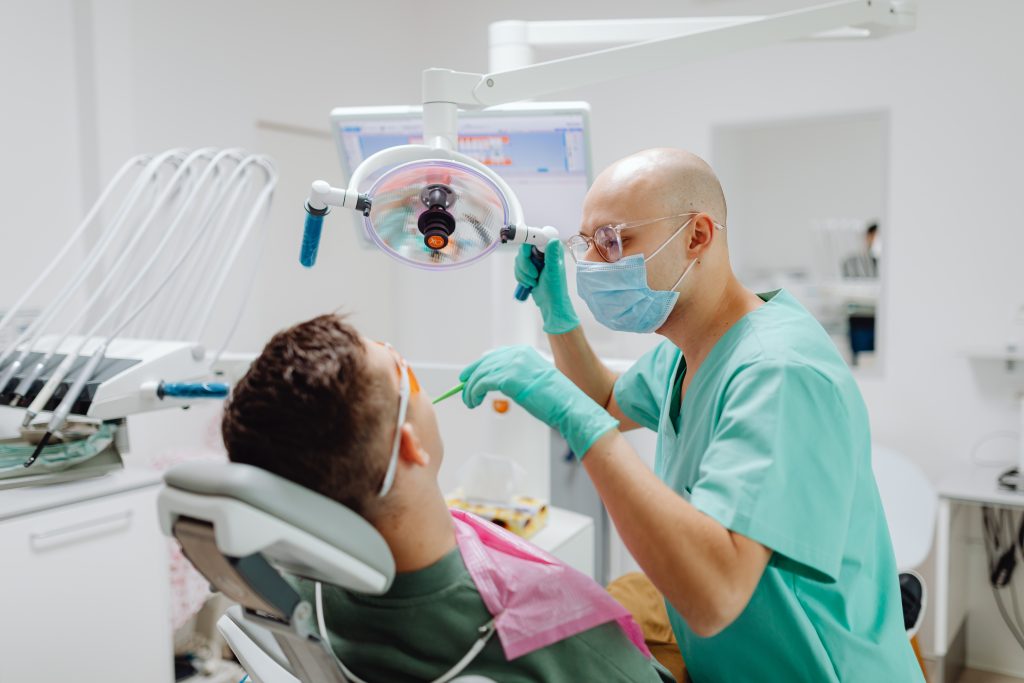
Search has changed more in the last two years than in the previous decade. Patients no longer scroll through ten blue links to find a dentist near them. Instead, Google often answers their question directly through an AI Overview, summarising information from a handful of trusted websites before a single click happens.
For dental practices, this shift is significant. If your website isn’t structured, written and optimised in a way that Google’s AI systems can understand and trust, you could become invisible at the exact moment a patient is deciding who to call. Whether you’re managing your online presence in-house or working with a dental marketing agency, this guide explains, in plain English, how dentists can improve their chances of appearing in Google AI Overviews in 2026 and what practical steps your practice can take starting today.
What are Google AI overviews and why do they matter for dentists?
AI Overviews are the AI-generated summaries that appear at the top of Google search results for many informational queries. Instead of listing websites, Google pulls together information from several sources and presents it as a short, conversational answer, often with links to the sites it drew from.
For dental practices, this matters because a huge share of patient research now starts with a question rather than a brand name. Searches like “Do I need a filling if my tooth doesn’t hurt?” or “How much does teeth whitening cost in the UK?” are increasingly answered by AI overviews before the patient ever lands on a website.
If your practice’s content is cited in that summary, you gain visibility, credibility and a direct route to a new patient enquiry. If it isn’t, a competitor’s content likely is, and that competitor gets the click, the call and the booking.
How does Google decide which dental websites to cite?
Google’s AI systems don’t work from nothing. They draw on the same core ranking signals that have always mattered for SEO, combined with newer factors related to how clearly your content answers a question.
Several elements consistently influence whether a page gets pulled into an AI overview:
- Clear, direct answers to specific questions: Pages that answer a single question concisely, near the top of the content, are easier for AI systems to extract and summarise. Burying the answer under several paragraphs of introduction makes it harder for Google to use.
- Demonstrated expertise and trustworthiness (E-E-A-T): Google’s quality guidelines place heavy weight on Experience, Expertise, Authoritativeness and Trustworthiness, particularly for health-related topics, which fall into the “Your Money or Your Life” category. Dental content is treated with extra scrutiny because poor advice could affect someone’s health.
- Structured data and schema markup: Adding schema such as local business, dentist, FAQ page, and review markup helps search engines understand exactly what your page is about and who is providing the information.
- A strong, well-maintained Google Business profile: For local searches, your business profile often acts as a primary data source for AI-generated local answers, including opening hours, services offered and patient reviews.
- Technical accessibility: If AI crawlers can’t efficiently access and read your site, none of your content quality matters. Fast-loading, mobile-friendly, properly indexed pages are a baseline requirement, not a bonus.
Building E-E-A-T for a dental website
E-E-A-T is no longer a nice-to-have for healthcare websites; it’s central to whether Google trusts your content enough to surface it. Here’s how dental practices can demonstrate each element clearly.
- Experience: Show that real people with real experience are behind the content. This could mean a dentist sharing how they approach a particular treatment, or before-and-after case studies (with patient consent) that show genuine outcomes from your practice rather than generic stock imagery.
- Expertise: Every page discussing a clinical topic, such as root canal treatment, dental implants, or gum disease, should be written or reviewed by a qualified dental professional. Include author bios with GDC registration numbers, qualifications and areas of specialism. This is one of the simplest and most overlooked ways to strengthen trust signals.
- Authoritativeness: Authoritativeness builds over time through consistent, accurate content, mentions from reputable sources and links from relevant websites such as dental associations, local news, or healthcare directories. Avoid thin, copy-paste content; it does the opposite of building authority.
- Trustworthiness: For a dental site, trustworthiness comes from transparency: clear pricing information where possible, accurate contact details, visible registration and accreditation badges, genuine patient reviews, and a secure, well-maintained website (HTTPS, no broken pages, clear privacy policy).
Structuring content so AI overviews can use it
The way your content is written matters just as much as what it says. AI overviews favour content that is easy to lift and summarise. Here’s how to structure pages with that in mind.
- Lead with the answer: If a page targets “how long does teeth whitening last”, the first paragraph should answer that directly, before expanding into detail, caveats and context.
- Use clear headings that mirror real questions: Headings phrased as questions (How much does an emergency dentist cost? What happens during a dental check-up?) align naturally with how people search and how AI systems parse content.
- Break information into digestible chunks: Short paragraphs, numbered steps for processes and clearly labelled sections all make it easier for AI to extract a clean, accurate summary.
- Add genuinely useful FAQ sections: FAQs targeting specific, common patient questions, marked up with FAQ schema, are a strong route into AI Overviews because they’re already formatted as question-and-answer pairs.
- Keep information current: Pricing, treatment availability and guidance can change. Reviewing and updating existing pages regularly signals freshness, which AI systems factor into how reliable a source appears.
The role of local SEO and Google Business profile
For most dental searches, intent is local. Patients aren’t just asking “what is a dental abscess”; they’re asking “emergency dentist near me” or “best dentist in [town] for nervous patients”. This means your Google Business Profile is one of the most valuable assets you have for AI visibility.
Make sure your profile includes a complete, accurate list of services, regularly updated photos, your correct opening hours (including holiday changes) and a steady stream of genuine patient reviews. Responding to reviews, both positive and negative, also feeds into how trustworthy your practice appears to both patients and AI systems.
Consistency matters too. Your practice name, address and phone number should match exactly across your website, Google Business Profile and any directory listings. Inconsistencies create confusion for search engines trying to verify your details.
Technical foundations you can’t skip
Even the best content won’t appear in AI Overviews if your website has technical barriers. A few essentials:
Your site should load quickly on mobile devices, since most patient searches happen on phones. Pages should be properly indexed, meaning they’re not accidentally blocked by robots.txt or marked as “noindex”. Structured data should accurately reflect what’s visible on the page; mismatched schema can do more harm than good. And your sitemap should be up to date so new or updated pages are discovered promptly.
A practical roadmap for dental practices
If this all feels like a lot, here’s a simplified order of priorities for the months ahead.
Start by auditing your existing service pages. Do they answer the questions patients are actually asking in a clear and direct way? Add or improve FAQ sections on your highest-traffic pages, using real questions from patient enquiries as inspiration.
Ensure every clinical page has a named, qualified author with visible credentials. Claim and fully optimise your Google Business Profile if you haven’t already and keep it updated monthly. Implement relevant schema markup across your site, particularly local business, dentist, and FAQ page.
Finally, build a simple content calendar so that new, helpful pages and updates to existing ones happen consistently rather than in occasional bursts.
Final thoughts
Appearing in Google AI Overviews isn’t about gaming a system; it’s about becoming the kind of source Google’s AI genuinely wants to recommend to someone searching for trustworthy dental information. That means clear answers, demonstrable expertise, a well-maintained local presence and a technically sound website working together.
For many practices, getting all of this right alongside the day-to-day running of a busy clinic is genuinely difficult. This is where working with a specialist makes sense. A dedicated dental SEO agency understands the specific E-E-A-T requirements for healthcare content, how to structure pages for AI visibility and how to manage the technical side without disrupting your existing site.
If you’d rather focus on patients than algorithms, partnering with an experienced dental marketing agency can help ensure your practice stays visible, credible and competitive as search continues to evolve through 2026 and beyond.


